Angel Investors in Michigan: 2026 Guide to Groups & Funding

Angel investors in Michigan are individuals, and the groups they form, who put personal money into very early companies in exchange for equity, a SAFE or a convertible note. This guide labels the main Michigan angel groups, explains how to approach them, and shows what you give up. It also covers when a different kind of capital fits better.
Key takeaways
- Angels invest their own money at pre-seed and seed stage. Venture capital funds, accelerators and grants are different things, and we label them separately.
- Most Michigan angel groups require accredited investor status for members. Founders should check each group's own site for current process, focus and check size.
- Warm introductions beat cold email. Match your stage, sector and region to a group's actual portfolio before you reach out.
- Angel money, venture capital and long-term private capital each carry different expectations on control and exit timing.
- Details in this guide are general. Confirm every group's current status directly, because activity changes.
What Angel Investors in Michigan Do (and Who Qualifies as One)
An angel investor is a person investing personal money in an early-stage company. Angels usually receive equity, a SAFE or a convertible note. They often invest alongside others, either informally or through an angel group where members review deals together.
Most angel groups require members to be accredited investors. In general terms, that means an individual with income above $200,000 ($300,000 with a spouse) in each of the last two years, or net worth above $1 million excluding a primary residence. Certain professional licenses can also qualify. The SEC and Investor.gov publish the formal definition. This is general information, not legal advice.
Angels are not venture capital funds, corporate funds, accelerators or grant programs. Founders mix these up constantly, and many "angel lists" blur them. We keep them apart here.
Angels are most common at pre-seed and seed stage. That is when a company has a product idea, a prototype or its first customers, but not a repeatable business.
Angel vs. venture capital vs. accelerator
| Source | Whose money | Typical role |
|---|---|---|
| Angel investor or group | Personal funds of members | Early checks, often with mentoring |
| Venture capital firm | A fund raised from outside investors | Larger rounds, formal governance, fund-driven exit timing |
| Accelerator | Program funding, sometimes a small equity stake | Structure, mentors, introductions |
Why Michigan angel activity looks different from the coasts
Michigan angel capital tends to follow the state's industrial base: mobility, advanced manufacturing, life sciences, software and agriculture. Many investors are former operators who understand supply chains and customers. The tradeoff is geography. Access differs between Detroit and Ann Arbor, Grand Rapids and the rest of the state.
One practical check is SEC Form D. Companies raising under certain exemptions often file one, and it is searchable on SEC EDGAR. It can show whether a group's investments are recent. It is not a complete record, since not every angel round is filed.
Michigan Angel Groups and Networks: A Labeled Directory
We have not independently verified every group's current activity, check size or application process as of this writing. Where we cannot confirm a detail from a group's own site, we say so. Treat each profile as a starting point and confirm status before you pitch.
Southeast Michigan: Detroit, Oakland County and Ann Arbor
- Ann Arbor Angels (angel group, Ann Arbor). Early-stage companies, with a connection to the University of Michigan ecosystem. Check size and sector focus: confirm on the group's site.
- Michigan Angel Fund (angel fund, Michigan-based). Invests in Michigan companies. Confirm current stage, focus and check size on its site.
- Great Lakes Angels (angel group). Appears in several Michigan directories. Confirm it is active and what it funds.
- Woodward Angels (angel group, Detroit area). Same advice: confirm active status, focus and process.
- Michigan Capital Network (network, connector). It links founders with accredited investors through its Angel Association. It is a connector, not a single pool of money.
West Michigan: Grand Rapids and Holland
- Grand Angels (angel group, Grand Rapids). One of West Michigan's best-known groups. Confirm current application steps and sector focus.
- Start Garden (Grand Rapids, program and early-stage support). It is not an angel group. Use it for early-stage help and local introductions.
Mid-Michigan and Northern Michigan
- Spartan Angel Network (angel network, East Lansing area). Associated with the Michigan State University ecosystem. Confirm current activity.
- Wolverine Angels (angel group). Listed in some directories. Confirm it is active before spending time on it.
- Northern Michigan Angels (angel group, northern Michigan). Confirm its geographic scope and stage.
Individual angels and how to verify they are active
Individual angels are hard to list responsibly. Names that circulate online, such as Ashwin Puri, Josh Linkner and Ren Carlton, appear in some directories. We are not endorsing or ranking anyone. Before you approach an individual, verify four things:
- A recent investment (within roughly the last year) in a company you can name.
- A match with your sector and stage.
- A mutual contact who can introduce you.
- Whether they invest alone or through a group.
VC firms and funds (not angels)
These invest institutional or fund capital on different terms and timelines. Do not pitch them as if they were angels.
- Renaissance Venture Capital (venture capital, Michigan-focused).
- Arboretum Ventures (venture capital, Ann Arbor, healthcare orientation).
- Detroit Venture Partners (venture capital, Detroit). Confirm its current status and activity.
How to Find Angel Investors in Michigan
Finding angel investors in Michigan is a matching exercise, not a mailing exercise. Follow these steps.
- Match stage and sector. Pre-seed and seed. Mobility, manufacturing, healthcare, software or agriculture.
- Build a short target list. Five to ten investors or groups whose recent deals resemble yours.
- Find a warm introduction. Ask advisors, attorneys, other founders and accelerator mentors.
- Send a concise ask. Two paragraphs, a one-page summary and a clear amount.
Michigan founders meet investors through Michigan Capital Network, Michigan Venture Capital Association (MVCA) events, Invest Detroit, and accelerators and incubators such as Bizdom, Start Garden, Desai Accelerator, Centrepolis and the Michigan SBDC. University programs add more routes. Our guide to startup funding in Michigan walks through capital at each stage.
Warm introductions work because the introducer is vouching for you. They also filter noise. A founder who earns one from a mentor or a portfolio founder starts with credibility a cold email cannot buy.
Geography matters. Detroit and Ann Arbor have more concentrated investor activity. Grand Rapids has its own network with a strong local identity. Outstate founders can still raise capital, but should expect more travel and more introductions to build.
To test sector fit, read the group's portfolio page and compare it with your pitch. If a group lists mostly software and you build industrial equipment, move on. Timelines vary widely. A reasonable expectation is weeks to a few months from first meeting to money in the bank, and longer if due diligence or legal work drags.
A simple investor-matching checklist
- Has this investor funded my stage in the last 12 months?
- Does their portfolio include my sector?
- Do we share a trusted contact?
- Do they invest in Michigan or in my region?
- Is the check size in their stated range?
Red flags: pay-to-pitch offers and unverifiable "investor lists"
Be wary of anyone who charges a fee to put you in front of investors, promises funding, or sells a list with no verifiable activity. Real angel groups may charge modest screening or event fees, so ask what the fee covers. A legitimate group explains its process on its own site.
How Much Do Angel Investors in Michigan Invest, and What Do They Get?
Check sizes vary by group and by individual. We are not quoting a Michigan average, because we cannot source one responsibly. Each group publishes its own range on its site, and when they pool money, a combined round may be larger than any single check. Ask the group directly.
Reading a term sheet at the pre-seed and seed stage
Early rounds use three common instruments. Confirm terms with your own attorney.
| Instrument | What it is | Key terms |
|---|---|---|
| Priced equity | Shares sold at a set valuation | Valuation, ownership percentage, rights |
| SAFE | Agreement to receive equity in a later round | Valuation cap, discount |
| Convertible note | Debt that converts to equity later | Interest, maturity date, cap, discount |
The SAFE vs. convertible note choice often comes down to simplicity and risk. A SAFE is not debt and has no maturity date. A note carries interest and a due date, which can create pressure if a later round does not arrive.
How much does an angel take? It depends on valuation and round size. Here is an illustrative example, not a benchmark. If you raise $500,000 at a $4 million pre-money valuation, the post-money valuation is $4.5 million, and the investors own about 11.1 percent. Every round after that dilutes both you and them.
How do angels make money? Exits come through an acquisition or a later financing round that gives them liquidity. Most angel investments do not return capital, and no investor should promise otherwise. Beyond money, angels commonly expect regular updates, basic information rights, and sometimes a board observer seat.
Angel group vs. individual angel: how the process differs
An individual angel decides alone and can move quickly. An angel group typically screens applications, hosts a pitch session, runs due diligence through a committee, and then lets members choose whether to invest. It is slower, but it can assemble a larger round from several members.
What Makes a Michigan Deal Fundable: An Investor's Checklist
Scott Zack, owner of Creek Equity, asks five questions before Creek Equity buys a company. They come from our own acquisition lens, but they work just as well on an early-stage pitch.
- Would customers miss it? Show proof: paying customers, pilots, repeat orders.
- Who actually runs it? Name the people and their roles.
- Where does the cash go? Give a specific use of funds.
- What would an investor add? Say what you need besides money.
- Does the case fit on one page? If not, it is not clear enough yet.
A solid pitch deck covers the problem, customer proof, team, use of funds, traction and the ask. Keep it short.
Team quality weighs heavily. Scott played forward for Ohio State men's basketball, and he writes about what that taught him in What Ohio State Basketball Taught Me About Building Companies. Preparation beats talent. Accountability is a habit. The right people in the right roles matter more than any single star. Investors read a team the same way.
Michigan pitches commonly stall for four reasons: unclear use of funds, no customer evidence, a founder-only team, and an unrealistic valuation.
A one-page business case template
- Customer and problem, in two sentences
- Proof customers want it
- Team and who does what
- Money needed and exactly where it goes
- What happens in the next 12 to 18 months
Questions angels will ask in the first meeting
- Who has paid you, and why?
- What happens if you do not raise this round?
- What does the next round need to look like?
- Who else is investing?
- What is your biggest risk?
Beyond Angels: Venture Capital, Permanent Capital and Selling to an Operator-Investor
Founders have more than one path. You can raise from angels, raise from venture capital, or partner with a long-term private investor. Each carries different tradeoffs.
| Angels | Venture capital | Long-term private investor | |
|---|---|---|---|
| Source of capital | Personal money | Fund raised from outside investors | Investor's own capital |
| Time horizon | Varies, often several years | Tied to fund life, often discussed as 5 to 7 years per deal | Decades |
| Exit expectation | Acquisition or later round | Expected, to return fund capital | No forced exit |
| Control | Minority stake, light governance | Board seats, protective terms common | Depends on the deal |
| Best fit | Pre-seed and seed | Companies built for fast scale | Durable, customer-loved businesses |
Angels and funds are each doing their job, and neither is wrong. A fund has a clock because its own investors expect capital back. That shapes board seats and exit pressure, so understand it before you sign.
Creek Equity sits in a different place. We are a private investment company in Bloomfield Hills that invests its own capital. We are not an angel group, a fund manager or an adviser, and we do not take outside investor money. We found companies, back founders, and acquire established businesses. Our growth capital is held for 5 to 15 years, and our core capital is measured in decades. Our permanent capital investors guide explains how this differs.
Every dollar we invest sits in one of four tiers: core, growth, aspirational, or a liquidity reserve of at least twelve months of obligations. The discipline is keeping them separate. We publish our Investment Principles, and a written Investment Policy Statement governs the capital. We are also a BBB Accredited Business, rated A+ by BBB of Michigan.
For established owners, our criteria are plain: essential-service, founder-led and family-owned Michigan companies with $1 million to $10 million of EBITDA. Our healthcare services portfolio includes Avenix Medical Group in hospital supply chain and Total Routing Solutions in medical courier logistics for clinical labs. Scott has been included in Crain's Detroit Business and Modern Healthcare's People on the Move.
If you are an owner rather than a startup founder, see how to sell your business in Michigan and alternatives to private equity for Michigan business owners. We make no promises on outcomes or valuations.
Frequently asked questions
Who are the most active angel investors in Michigan?
We cannot responsibly rank them. Michigan Angel Fund, Grand Angels and Ann Arbor Angels are among the best-known groups, but activity changes. Check recent investments and Form D filings before you pitch.
How many angel investor groups are in Michigan?
There is no single authoritative count, and groups start, merge and go quiet. This guide lists the groups that appear most often in directories. Confirm each one's status directly.
How much do angel investors in Michigan typically invest?
It varies by group and individual. We do not quote an average because we cannot source one. Each group's own site or application page states its range, and pooled rounds can be larger than single checks.
What is the difference between an angel group and an individual angel investor?
An individual decides alone and can move fast. A group screens, hosts pitches, runs diligence and lets members invest together. Groups take longer but can assemble a bigger round.
Do I need to be an accredited investor to join an angel group?
Most groups require it, because they invest in private securities offerings. The SEC defines the term in detail. Ask the group about its requirements, and consult an attorney for your own situation.
What do angels expect in return: equity, convertible notes or SAFEs?
Any of the three. Equity sets a price now. A SAFE or note defers the price to a later round. Angels also commonly expect updates, and sometimes information rights or a board observer seat.
What industries do Michigan angel investors focus on?
Commonly mobility and automotive, advanced manufacturing, life sciences and healthcare, software and agriculture. Read each group's portfolio to see its real focus.
Conclusion
The best angel search is specific: the right stage, the right sector and a warm introduction. Know what you give up, and know that angels, venture capital and long-term private capital each solve a different problem. If you are a founder or owner thinking about what comes next, Start a conversation with Creek Equity.
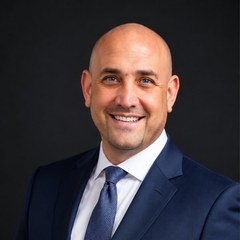
Scott Zack is the owner of Creek Equity, a private investment company in Bloomfield Hills, Michigan that founds, funds, and acquires businesses. He played forward for the Ohio State men's basketball team and has spent more than two decades building companies in Michigan. Read more about Scott.