Startup Funding in Michigan: Where to Find Capital at Each Stage

Startup funding in Michigan comes from five broad places: grants and competitions, angel investors, pre-seed and seed funds, venture capital, and private or patient capital. Which one fits depends on your stage, your type of business, and what you are willing to give up in control and time. This guide maps each source to a stage and then shows what each one asks of you.
Key takeaways
- Match the source to your stage and to what the money is for: product build, working capital, hiring, an acquisition, or an ownership transition.
- Non-dilutive funding costs no equity but comes with eligibility rules and reporting, and it often targets technology commercialization.
- Venture capital suits businesses built for large, fast outcomes. Many founder-led service, healthcare, logistics, and industrial companies fit other capital better.
- Judge every source by what it asks of you: control, timeline, and involvement.
Startup Funding in Michigan: The Short Answer by Stage
| Stage | Most likely sources | Typical tradeoff |
|---|---|---|
| Idea | Grants, pitch competitions, friends and family, university programs | Small amounts, time spent on applications |
| Pre-seed | Pre-seed funds, angel investors, accelerators | Early equity, high expectations for speed |
| Seed | Seed funds, angel groups, state-linked programs | Dilution, board or reporting expectations |
| Series A | Venture capital | Growth targets, fund-life exit pressure |
| Established operating business | Private or patient capital, lenders, succession partners | Depends on the partner; ask about hold period |
Most guides assume a venture-backed software company. Michigan also has founder-led service, healthcare, logistics, and industrial businesses that need a different kind of capital.
Last reviewed: October 2026. Michigan programs change often, so confirm current terms with the program itself before you apply.
How to read this guide
Find your stage first. Then, for each source, check three things: how much control you give up, how long the money is expected to stay in, and how involved the investor will be.
Why the source matters as much as the amount
Two checks of the same size can lead to very different companies. One comes with a ten-year clock on the investor's side, the other with a sale expected in a few years. Know which one you are accepting.
Matching Funding to Your Company Stage
The company lifecycle runs from idea, to prototype or first customers, to repeatable revenue, to scaling, to a mature or succession stage. The useful question at each point is simple: what does my business actually need money for?
Idea and pre-seed
Pre-seed usually means the first outside money, before the business has proven repeatable demand. It pays for a prototype, a pilot, or the first hire. Grants, competitions, and angels are common here.
Seed and early revenue
Seed money generally follows some evidence of customers. Investors want to see that people will pay and that you know why. Funds publish their own ranges, so use those instead of rules of thumb.
Series A and scaling
Series A typically funds a business with repeatable revenue that needs capital to scale. This is where institutional venture capital becomes the main source, and where expectations about growth rate become formal.
Established and owner-transition stage
A business with years of cash flow may need growth capital, a partner for management, or a succession plan. Venture capital rarely fits here. Private investors, lenders, and buyers do. Our guide to Michigan business succession planning covers this stage in more detail.
Public Programs and Non-Dilutive Funding in Michigan
Non-dilutive funding is money you do not repay with equity. Grants are the clearest example. Founders pursue it first because they keep ownership. The price is paperwork, eligibility rules, and reporting.
The public layer in Michigan includes:
- MEDC (Michigan Economic Development Corporation): the state's economic development agency. Its MEDC startup programs page is the best starting point.
- Michigan Strategic Fund: the board that approves many state incentives and programs, administered with MEDC.
- Michigan Innovation Fund and Michigan Rise Pre-Seed Fund: state-linked programs aimed at early-stage companies. Read each program's official page for who qualifies and how money is delivered.
- MSU Research Foundation: supports commercialization of university research.
- SBIR/STTR: federal technology research grants. See SBIR.gov.
Support organizations help with navigation more than capital. Ann Arbor SPARK, Start Garden in Grand Rapids, and Detroit-area programs offer introductions, coaching, and programs. Treat them as guides to the other sources.
Grants versus loans versus equity programs
Grants require no repayment but usually restrict use. Loans keep your ownership but need cash flow to service. Equity programs bring a partner. Read the instrument before the headline number.
Questions to ask before applying for startup funding in Michigan
- Who is eligible, by stage, industry, and location?
- What can the money be spent on?
- What reporting is required, and for how long?
- Does accepting it limit other funding?
- How long from application to cash?
Where programs tend to skip founders: non-tech and service businesses
Grants rarely fund a whole company, and many target technology commercialization. A medical courier, a distributor, or a regional services firm often will not qualify. That does not make the business unfundable. It means the right source is a different one.
Angels, Venture Capital, Accelerators, and Pitch Competitions
Angel investors
Angel investors in Michigan are individuals, often former operators, writing personal checks. They usually move faster than funds and bring industry contacts. Many invest through groups. Expect questions about the team and the first customers.
Pre-seed and seed funds
Funds invest on behalf of others, so they have a fund life and need exits. To find active Michigan venture capital investors, use public signals: portfolio pages, ecosystem reports, and SEC Form D filings, which you can search on SEC EDGAR. Each firm's stated stage and check size matter more than any general claim.
Geography matters too. Ann Arbor has a deep university-linked technology scene. Detroit has mobility and urban-focused activity. Grand Rapids has a strong early-stage community through Start Garden. Oakland County has established operating companies and private capital that rarely shows up in startup directories.
A starter list, not exhaustive: Michigan Founders Fund, Start Garden, MSU Research Foundation, Ann Arbor SPARK, and the Michigan Venture Capital Association for ecosystem data.
Accelerators and competitions
Accelerators and Michigan pitch competitions provide small cash, credibility, and introductions. They are useful, but they are not a funding plan. Enter them for the relationships.
Reading deal-activity data without being misled
Quarterly totals swing with a few large rounds. Before relying on any figure:
- Cite the source and the date.
- Compare several quarters, not one.
- Separate deal count from dollar volume.
- Ask who is counted and who is not.
VC Money vs. Patient Private Capital: What Each Asks of You
Venture funds raise money from outside investors and must return it within a fund life. That shapes dilution, growth expectations, and timing. Patient capital invested from an owner's own balance sheet has no fund clock. Neither is better in general. VC is the right tool for businesses built to grow very large, very fast.
| Venture capital | Patient private capital | |
|---|---|---|
| Control | Board seats, protective terms | Varies by partner; ask directly |
| Timeline | Set by fund life | Set by the owner's horizon |
| Involvement | Often active in strategy and hiring | Varies from hands-off to operating support |
| Exit expectation | Sale or IPO within the fund | Exit not required by structure |
| Best fit | High-growth, scalable ventures | Durable businesses with loyal customers |
How Creek Equity works
Creek Equity is a private investment company in Bloomfield Hills. We invest our own capital. We do not manage outside investor money and we are not a fund. Our growth capital is held for 5 to 15 years, and our core capital is measured in decades.
Our model is Build. Invest. Grow. We found companies from a blank page, back founders at the earliest stages, and acquire established businesses with room to run. We are not a grant program or an open pipeline for every startup. Our acquisitions focus on founder-led and family-owned Michigan companies with $1 million to $10 million of EBITDA.
Every dollar sits in one of four tiers: core, growth, aspirational, and a liquidity reserve of at least twelve months of obligations. The discipline is keeping them separate. Read more in Four Tiers Of Capital.
Our healthcare services companies, Avenix Medical Group (hospital supply chain) and Total Routing Solutions (medical courier logistics for clinical labs), are examples of essential-service businesses we have built and backed.
What Serious Investors Actually Evaluate
Whatever the source, the questions are similar. Scott Zack asks five before we buy a company:
- Would customers miss it?
- Who actually runs it?
- Where does the cash go?
- What would we add?
- Does the case fit on one page?
We write that page before every investment. See One Page Memo Before Every Investment. If you can answer these five questions about your own business, you are ready for most investor conversations.
Frequently asked questions
What funding sources are available for Michigan startups at each stage?
Early on, grants, competitions, and angels. At pre-seed and seed, funds and angel groups. At Series A, venture capital. Established businesses often use private capital, lenders, or a succession partner. See the table above.
What state-backed funding or grants exist for Michigan startups?
MEDC, the Michigan Strategic Fund, the Michigan Innovation Fund, and the Michigan Rise Pre-Seed Fund are the main public starting points. Terms change, so check each program's official page.
How long does fundraising typically take?
It varies by source and stage. Plan for months, not weeks, for most priced rounds, and start before you need the cash. Grants can take longer than angels.
How do I find the right investor for my startup?
Look at who has funded companies like yours, using portfolio pages and SEC Form D filings. Check each investor's stated stage, check size, and industry focus, and ask about involvement and timeline before you pitch.
Are there pitch competitions or accelerators in Michigan that give out money?
Yes, in several regions, though prize amounts and terms change. Treat them as a source of small cash, credibility, and introductions rather than a full funding plan.
How much did Michigan startups raise recently, and is funding up or down?
We do not quote a figure here because any single quarter goes stale. Check current ecosystem reports from sources such as the Michigan Venture Capital Association, and compare several periods.
Conclusion
The right capital depends on your stage, your business, and what you are willing to trade. If you own or run a founder-led Michigan business and want to talk about building, backing, or buying, Start a conversation with Creek Equity.
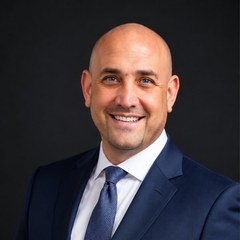
Scott Zack is the owner of Creek Equity, a private investment company in Bloomfield Hills, Michigan that founds, funds, and acquires businesses. He played forward for the Ohio State men's basketball team and has spent more than two decades building companies in Michigan. Read more about Scott.